Metabolic health is evolving rapidly. As of early 2026, Eli Lilly’s investigational compound, retatrutide (LY3437943), has emerged as a leading candidate for treating obesity, type 2 diabetes (T2D), and metabolic dysfunction-associated steatohepatitis (MASH). By targeting three distinct hormone receptors simultaneously, this peptide produces weight loss and metabolic outcomes that surpass current dual-agonist therapies.
What Is Retatrutide? A Plain-English Introduction
If you’ve seen retatrutide mentioned in the news around Eli Lilly’s Phase 3 trial results and want the short version before the deep technical profile below: retatrutide is an investigational “triple agonist” — a single injectable compound engineered to act on three separate hormone receptors at once, rather than just one or two like earlier metabolic therapies. Retatrutide is not yet approved by any regulatory body. It remains an investigational compound restricted to legitimate, authorised research settings.
The three receptors it targets are:
- GLP-1: slows gastric emptying, curbs appetite, and supports glucose-dependent insulin release.
- GIP: improves insulin release and plays a role in how the body buffers and stores energy, including preventing fat build-up in the liver and muscles.
- Glucagon: increases energy expenditure and encourages the body to break down stored fat — the mechanism most responsible for retatrutide’s liver-fat results in trials.
Semaglutide (Wegovy/Ozempic) targets GLP-1 alone. Tirzepatide (Mounjaro) targets GLP-1 and GIP together. Retatrutide adds the third receptor, glucagon, on top of both. For a full side-by-side breakdown of how the triple-agonist mechanism compares with tirzepatide’s dual-agonist approach, see our Retatrutide vs Tirzepatide comparison guide.
Everything below this point is the exhaustive technical profile: the molecule’s exact chemical structure, why each modification exists, and how it binds each of the three receptors. If the plain-English mechanism above is all you needed, that’s the summary — the rest of this page is for readers who want the underlying chemistry.
Introduction to Unimolecular Polypharmacology and Molecular Identification
The conceptualization and subsequent engineering of unimolecular polypharmacology represent one of the most complex frontiers in modern rational drug design. In this paradigm, a single synthetic molecular entity is constructed to simultaneously engage and activate multiple distinct biological receptors with high affinity. Retatrutide, extensively identified within developmental pipelines as LY34377943, stands as the paramount realization of this architectural methodology.
It is an extensively engineered, synthetically derived 39-amino-acid peptide specifically designed to function as a highly balanced triple agonist targeting the glucose-dependent insulinotropic polypeptide receptor (GIPR), the glucagon-like peptide-1 receptor (GLP-1R), and the glucagon receptor (GCGR).
The fundamental biophysical constraint inherent in the design of any multi-receptor agonist lies in the structural divergence of the intended biological targets. The GLP-1R, GIPR, and GCGR all belong to the Class B1 family of G protein-coupled receptors (GPCRs). While they share a broad overarching topology—characterized by a large, highly structured extracellular domain (ECD) connected to a seven-transmembrane (7TM) helical bundle—their specific orthosteric binding clefts and the flexible extracellular loops that govern ligand entry are distinctly evolved to recognize only their cognate native hormones.
Endogenous hormones such as GLP-1, GIP, and glucagon possess highly specific topological geometries that are tailored exclusively to their respective receptors. Retatrutide overcomes this evolutionary specificity by utilizing a heavily modified chimeric backbone, interlaced with non-standard, sterically hindered amino acids and a precisely positioned lipidation architecture.
The exhaustive physical and chemical identification profile of the retatrutide molecule reflects its intense synthetic complexity. The fully assembled peptide possesses a molecular weight of 4731.33 Daltons and a molecular formula of C221H342N46O68. Its formal systematic nomenclature elucidates the exact sequence and the locations of its complex modifications: L-Tyrosyl-2-methylalanyl-L-glutaminylglycyl-L-threonyl-L-phenylalanyl-L-threonyl-L-seryl-L-α-aspartyl-L-tyrosyl-L-seryl-L-isoleucyl-2-methyl-L-leucyl-L-leucyl-L-α-aspartyl-L-lysyl-N6-[N-(19-carboxy-1-oxononadecyl)-L-γ-glutamyl-2-[2-(2-aminoethoxy)ethoxy]acetyl]-L-lysyl-L-alanyl-L-glutaminyl-2-methylalanyl-L-alanyl-L-phenylalanyl-L-isoleucyl-L-α-glutamyl-L-tyrosyl-L-leucyl-L-leucyl-L-α-glutamylglycylglycyl-L-prolyl-L-seryl-L-serylglycyl-L-alanyl-L-prolyl-L-prolyl-L-prolyl-L-serinamide.
Cataloged under the specific CAS Registry Number 2381089-83-2, retatrutide does not exist in nature; it is a profound masterpiece of rational protein engineering that completely redesigns the incretin molecular framework.
The complete molecular architecture of retatrutide can be conceptually subdivided into four highly specialized critical domains: the GIP-derived primary sequence backbone, the strategic insertion of non-proteogenic amino acids to dictate secondary structure, the complex pharmacokinetic lipidation machinery positioned at residue 17, and the C-terminal stabilizing extension. The flawless integration of these distinct components allows the molecule to maintain high-affinity binding orientations across three separate receptor topographies without introducing deleterious steric clashes or compromising its pharmacokinetic durability. The following sections provide an exhaustive analysis of these individual structural elements and the biophysical mechanics governing their interactions.
Primary Sequence Architecture and Chimeric Derivation
The structural foundation of retatrutide’s molecular architecture is an extensively modified, 39-amino-acid continuous peptide chain. During the initial phases of structure-based drug design for peptide therapeutics, the determination of the primary backbone sequence is paramount. The primary sequence dictates the molecule’s overall helical propensity, its isoelectric point, its aqueous solubility, and, most importantly, the exact spatial presentation of the amino acid side chains to the receptor interface.
The foundational sequence of retatrutide is fundamentally derived from the molecular structure of the native glucose-dependent insulinotropic polypeptide (GIP). The strategic decision to utilize a GIP-centric backbone ensures that the foundational architecture possesses an overwhelmingly high intrinsic affinity for the GIP receptor. In vitro pharmacological and binding affinity profiling indicates that retatrutide is up to nine times more potent at the human GIP receptor than the endogenous GIP ligand itself, whereas its activity at the GLP-1 and glucagon receptors is highly balanced but slightly less potent than their respective native ligands. This specific baseline bias toward GIPR was intentionally engineered into the structural backbone to maximize metabolic parameters while building upon a highly stable sequence framework.
The exact linear amino acid sequence from the N-terminus to the C-terminus, reflecting the sodium salt formulation of the peptide, is established as follows: Tyr-{Aib}-Gln-Gly-Thr-Phe-Thr-Ser-Asp-Tyr-Ser-Ile-{α-Me-Leu}-Leu-Asp-Lys-{diacid-C20-γ-Glu-(AEEA)-Lys}-Ala-Gln-{Aib}-Ala-Phe-Ile-Glu-Tyr-Leu-Leu-Glu-Gly-Gly-Pro-Ser-Ser-Gly-Ala-Pro-Pro-Pro-Ser-NH2.
To achieve simultaneous triple agonism at three different receptors, the foundational GIP backbone had to be systematically mutated to incorporate critical structural recognition motifs that are homologous to both GLP-1 and glucagon. Class B1 GPCR ligands, including the endogenous incretin hormones, generally bind to their target receptors via a complex two-domain mechanism. In this mechanism, the C-terminal segment of the peptide forms an amphipathic alpha-helix that interacts with the large, globular extracellular domain (ECD) of the receptor. Concurrently, the N-terminal segment inserts deep into the transmembrane (TM) bundle, initiating the precise conformational shifts required to trigger receptor activation and subsequent intracellular G-protein signaling.
Because the orthosteric binding pockets within the 7TM bundles of the GLP-1R, GIPR, and GCGR share a degree of evolutionary conservation, the extreme N-terminus of retatrutide is highly conserved. Conversely, because the extracellular domains and the extracellular loops of these receptors are highly divergent, the middle and C-terminal segments of the peptide require extensive chimeric engineering to navigate the distinct topographical constraints of each individual receptor.
Sequence Alignment and Homology Mapping
A rigorous comparative analysis of the primary sequences demonstrates exactly how the molecular architecture of retatrutide borrows and optimizes structural elements from multiple native incretin hormones. The following alignment maps the first 30 residues of retatrutide against the corresponding sequences of human GIP, GLP-1 (active form 7-36), and human glucagon, highlighting the specific substitutions necessary for triple receptor engagement.
| Position |
Retatrutide (LY3437943) |
Native human GIP |
Native human GLP-1 (7-36) |
Native human Glucagon |
| 1 | Tyr (Y) | Tyr (Y) | His (H) | His (H) |
| 2 | Aib | Ala (A) | Ala (A) | Ser (S) |
| 3 | Gln (Q) | Glu (E) | Glu (E) | Gln (Q) |
| 4 | Gly (G) | Gly (G) | Gly (G) | Gly (G) |
| 5 | Thr (T) | Thr (T) | Thr (T) | Thr (T) |
| 6 | Phe (F) | Phe (F) | Phe (F) | Phe (F) |
| 7 | Thr (T) | Ile (I) | Thr (T) | Thr (T) |
| 8 | Ser (S) | Ser (S) | Ser (S) | Ser (S) |
| 9 | Asp (D) | Asp (D) | Asp (D) | Asp (D) |
| 10 | Tyr (Y) | Tyr (Y) | Val (V) | Tyr (Y) |
| 11 | Ser (S) | Ser (S) | Ser (S) | Ser (S) |
| 12 | Ile (I) | Ile (I) | Ser (S) | Lys (K) |
| 13 | α-Me-Leu | Ala (A) | Tyr (Y) | Tyr (Y) |
| 14 | Leu (L) | Met (M) | Leu (L) | Leu (L) |
| 15 | Asp (D) | Asp (D) | Glu (E) | Asp (D) |
| 16 | Lys (K) | Lys (K) | Gly (G) | Ser (S) |
| 17 | Lys-Lipid | Ile (I) | Gln (Q) | Arg (R) |
| 18 | Ala (A) | His (H) | Ala (A) | Arg (R) |
| 19 | Gln (Q) | Gln (Q) | Ala (A) | Ala (A) |
| 20 | Aib | Gln (Q) | Lys (K) | Gln (Q) |
| 21 | Ala (A) | Asp (D) | Glu (E) | Asp (D) |
| 22 | Phe (F) | Phe (F) | Phe (F) | Phe (F) |
| 23 | Ile (I) | Val (V) | Ile (I) | Val (V) |
| 24 | Glu (E) | Asn (N) | Ala (A) | Gln (Q) |
| 25 | Tyr (Y) | Trp (W) | Trp (W) | Trp (W) |
| 26 | Leu (L) | Leu (L) | Leu (L) | Leu (L) |
| 27 | Leu (L) | Leu (L) | Val (V) | Met (M) |
| 28 | Glu (E) | Ala (A) | Lys (K) | Asn (N) |
| 29 | Gly (G) | Gln (Q) | Gly (G) | Thr (T) |
| 30 | Gly (G) | Lys (K) | Arg (R) | — |
As explicitly detailed in the comparative alignment, the extreme N-terminal region (residues 1 through 6) remains largely conserved across the endogenous hormones and retatrutide, with the notable exception of the Aib substitution at position 2. This high degree of conservation is an absolute biophysical necessity because this specific domain inserts into the deepest, most highly conserved orthosteric binding pockets of the transmembrane bundles of the GLP-1, GIP, and Glucagon receptors.
Structural deviations, therefore, primarily occur in the middle region of the peptide (residues 10 to 21). This middle region is precisely tasked with navigating the highly divergent extracellular loop 1 (ECL1) topologies of the three target receptors. By substituting specific key residues in this middle domain, the molecular architecture of retatrutide selectively modulates the binding thermodynamics to achieve simultaneous receptor engagement without steric rejection.
Thermodynamic Pre-Organization and Steric Shielding: The Role of Non-Coded Amino Acids
A defining and revolutionary characteristic of retatrutide’s molecular architecture is the deliberate incorporation of non-coded, non-proteogenic amino acids. Endogenous incretin peptides like GLP-1 and GIP have exceptionally short circulating half-lives in vivo, often calculated at approximately 2 to 5 minutes. This rapid clearance is largely driven by rapid proteolytic cleavage mediated by endogenous enzymes, most notably Dipeptidyl Peptidase-4 (DPP-4).
To aggressively circumvent enzymatic degradation and to thermodynamically force the peptide backbone into highly specific three-dimensional alpha-helical conformations, retatrutide utilizes three distinct non-natural amino acid substitutions at specific loci: positions 2, 13, and 20.
Position 2: α-Aminoisobutyric Acid (Aib2)
The second residue from the N-terminus of retatrutide is α-aminoisobutyric acid (Aib), an engineered residue also frequently referred to as 2-methylalanine. In the native GLP-1 and native GIP sequences, this exact position is occupied by the standard amino acid L-alanine. The endogenous enzyme DPP-4 specifically recognizes and enzymatically cleaves peptides that feature an alanine or a proline at the penultimate N-terminal position, rapidly rendering the hormones inactive.
By substituting the endogenous L-alanine with Aib, the molecular architecture introduces a second methyl group directly at the alpha-carbon of the residue. This α,α-dialkyl substitution creates a massive degree of local steric hindrance around the peptide bond connecting residues 2 and 3. The added bulk of the dual methyl groups physically prevents the catalytic active site of the DPP-4 enzyme from accessing, binding, and hydrolyzing the adjacent peptide bond. Consequently, the inclusion of Aib2 confers profound structural resistance against N-terminal enzymatic degradation, preserving the biological integrity of the sequence necessary for deep receptor activation.
Beyond purely enzymatic protection, the presence of Aib imposes severe biophysical restrictions on the backbone dihedral angles (specifically the phi and psi angles) of the peptide chain. These conformational constraints strongly promote the formation and rigid stabilization of α-helical secondary structures. Notably, exhaustive molecular docking and binding pocket analyses demonstrate that the side chain of the Aib2 residue does not form any direct hydrogen bonds, salt bridges, or key hydrophobic contacts with the GPCR proteins themselves. Instead, the role of Aib2 is almost entirely structural and thermodynamic—it actively locks the N-terminus into an active, tightly coiled helical conformation that significantly lowers the entropic cost of receptor binding. By paying the entropic penalty of helix formation prior to receptor engagement, the overall binding affinity is dramatically increased.
Position 13: α-Methyl-L-Leucine (α-Me-Leu13)
At position 13, retatrutide incorporates a second highly specialized non-coded residue: α-methyl-L-leucine (designated as αMeL or 2-methylleucine). This specific modification is a critical architectural feature directly responsible for tuning the molecule’s complex multi-receptor profile. Rational drug design studies have continuously shown that specific hydrophobic contacts in the middle segment of the peptide are absolutely required for the effective activation of the glucagon receptor (GCGR).
Native GIP possesses a small L-alanine residue at position 13, while GLP-1 and glucagon possess a bulky L-tyrosine. The substitution with α-Me-Leu provides a bulky, branched aliphatic side chain paired seamlessly with the conformational rigidity of an α-methyl group at the backbone. Cryo-electron microscopy (cryo-EM) mapping reveals that the inclusion of αMeL13 is physically indispensable for achieving optimal GCGR and GIPR activity.
Within the GIPR binding pocket, the side chain of αMeL13, along with the adjacent Leu14, engages in extensive hydrophobic packing interactions with the receptor’s extracellular domain. Specifically, αMeL13 interacts tightly with Arg131 of the GIPR to anchor the middle segment of the peptide. The constrained geometry imposed by the α-methyl group ensures that the isobutyl side chain of the leucine moiety is continuously projected into the correct spatial vector, allowing it to interact with the hydrophobic traps of both the GCGR and the GIPR without requiring significant conformational rearrangement or energy expenditure upon binding.
Position 20: α-Aminoisobutyric Acid (Aib20)
The third non-standard amino acid substitution occurs at position 20, where a second α-aminoisobutyric acid (Aib) residue is deliberately incorporated into the sequence. The introduction of Aib20 serves a multipronged architectural purpose. First, highly similar to the function of Aib2, Aib20 restricts the local backbone flexibility and acts as a powerful “helix inducer”. The middle segment of native incretin peptides has a strong thermodynamic tendency to unfold or adopt disordered random coil conformations when circulating in an aqueous solution.
By placing a rigid Aib residue precisely at position 20, the peptide is pre-organized into an alpha-helix, further reducing the entropic penalty incurred when the peptide must transition from a fully solvated state in the bloodstream to the highly ordered receptor-bound state. Furthermore, the specific presence of Aib20 contributes to optimal GIP receptor activity and fundamentally enhances the overall developability and pharmacokinetic profile of the entire macromolecule.
Just as observed with Aib2, the structural mapping definitively indicates that the side chain of Aib20 does not directly participate in the formation of the binding interface with the target receptors; it lacks any chemical capacity to form hydrogen bonds or salt bridges. Its primary mechanical function is to rigidify the spacer region immediately adjacent to the massive lipidation site located at position 17. By stiffening the backbone here, it ensures that the peptide does not distort, warp, or kink when the massive fatty diacid moiety engages with human serum albumin.
The Acylation Machinery and Pharmacokinetic Architecture
The most visually prominent and chemically complex modification in retatrutide’s molecular architecture is its sophisticated acylation machinery. To transition the peptide from the status of an endogenous hormone with a half-life measured in minutes to a highly viable, once-weekly therapeutic with an elimination half-life of approximately six days, retatrutide utilizes a massive fatty acid conjugation strategy.
This lipidation is specifically and exclusively anchored to the epsilon-amino group of the lysine residue located at position 17 (Lys17). The exact chemical identity of this massive modification is formally described as N6-[N-(19-carboxy-1-oxononadecyl)-L-γ-glutamyl-2-[2-(2-aminoethoxy)ethoxy]acetyl]-L-lysyl. This intricate side chain is meticulously constructed from three distinct structural modules: the hydrophilic spacer (AEEA), the acidic linker (gamma-glutamate), and the terminal hydrophobic tail (C20 eicosanedioic acid).
The Point of Conjugation: The Selection of Lysine 17
The deliberate selection of position 17 for lipid attachment is a critical architectural decision resulting from exhaustive structure-activity relationship (SAR) profiling. In the field of unimolecular polypharmacology, the placement of a massive lipid moiety runs the severe biophysical risk of inducing destructive steric clashes within the binding pockets of the target receptors, which would completely nullify receptor activation. For structural comparison, the dual GIP/GLP-1 agonist tirzepatide is lipidated at position 20, while the GLP-1 mono-agonist semaglutide is lipidated at position 26.
High-resolution cryo-EM structures of retatrutide physically bound to its three receptors demonstrate exactly why Lys17 was chosen as the optimal anchor point. In the receptor-bound state, the side chain of Lys17 points directly outward into the solvent, away from the hydrophobic core of the transmembrane domain and away from the intricate extracellular loops of the GLP-1, GIP, and glucagon receptors. By orienting the attachment point strictly toward the solvent-exposed exterior, the molecular architecture allows the bulky lipid tail to trail freely into the extracellular space without physically disrupting the peptide’s highly conserved interactions with the receptor orthosteric sites.
The AEEA and Gamma-Glutamate Linkers
Directly attached to the epsilon-amino group of Lys17 is an AEEA spacer, chemically defined as 2-[2-(2-aminoethoxy)ethoxy]acetic acid. AEEA serves as a hydrophilic, mini-polyethylene glycol (PEG)-like chemical extension. The specific presence of ether oxygens within the AEEA molecule grants the side chain a high degree of rotational freedom and structural flexibility. This flexibility is absolutely essential because it acts as a molecular tether, allowing the terminal fatty acid to autonomously search for and bind to circulating serum albumin independently of the peptide backbone’s rigid alpha-helical structure.
Without the AEEA spacer providing distance and articulation, the rigid proximity of the lipid to the peptide could easily distort the secondary structure, nullifying receptor engagement entirely. Immediately following the AEEA spacer is a gamma-glutamate (γ-Glu) linker. Unlike standard peptide bonds which form tightly at the alpha-carbon of an amino acid, this specific linkage occurs through the gamma-carboxyl group of the glutamic acid residue, extending the distance further. The inclusion of the γ-Glu linker provides an additional negative charge at physiological pH, which fundamentally enhances the overall aqueous solubility of the highly hydrophobic lipidated complex. Furthermore, the specific stereochemistry of the gamma-linkage aligns the final fatty acid moiety in an optimal physical vector to enter the deep, hydrophobic binding clefts of human serum albumin upon entering the bloodstream.
The C20 Fatty Diacid: Eicosanedioic Acid
The terminal, active component of the lipidation architecture is a massive 20-carbon fatty diacid chain, specifically identified as 19-carboxy-1-oxononadecyl or eicosanedioic acid. Unlike standard fatty acids (such as the 16-carbon palmitic acid utilized in the structure of liraglutide) which terminate in a highly hydrophobic methyl group, a diacid possesses a reactive carboxylic acid at both extreme ends of the carbon chain. In the structure of retatrutide, one carboxyl group is utilized to form the stable amide bond with the γ-Glu linker, while the other remains completely free at the distal end of the lipid chain.
The C20 diacid is the primary biophysical engine driving retatrutide’s extreme pharmacokinetic durability. Once the molecule is injected into the subcutaneous tissue and successfully absorbed into the bloodstream, the highly hydrophobic 20-carbon chain intercalates tightly into the high-affinity fatty-acid-binding pockets of circulating human serum albumin. The free distal carboxylic acid serves to stabilize this interaction through strong electrostatic bonding with basic amino acid residues lining the surface of the albumin molecule.
By reversibly binding to albumin with such high affinity, retatrutide effectively increases its hydrodynamic radius to match that of the massive carrier protein (which is approximately 66 kDa). This massive increase in apparent size allows the drug to completely evade rapid renal filtration. Additionally, physical albumin binding creates a steric shield around the peptide, protecting it from circulating enzymatic degradation, extending its half-life to roughly six days, and successfully permitting once-weekly administration.
C-Terminal Architecture and Thermodynamic Stability
While the N-terminus and middle segments of retatrutide are entirely dedicated to receptor activation and lipid spacing, the C-terminal architecture is heavily engineered to ensure massive structural stability and prolonged half-life in a biological environment. The highly specific sequence spanning from position 30 to position 39 is GPSSGAPPPS.
The Exendin-Tail Polyproline Motif
This specific ten-amino-acid sequence is commonly referred to in medicinal chemistry as the “exendin-tail”. It is entirely distinct from the human sequences of GIP, GLP-1, or glucagon. Instead, it is derived directly from the structure of exendin-4, a naturally occurring, highly stable peptide found in the salivary secretions of the Gila monster (Heloderma suspectum).
The explicit incorporation of the exendin-tail into the molecular architecture of retatrutide serves to dramatically stabilize the secondary structure of the entire peptide complex. The uniquely high concentration of proline residues within this segment (specifically, four prolines grouped within a nine-residue span at positions 31, 36, 37, and 38) forces the peptide to induce the formation of a rigid, polyproline-type helix, frequently known as a “Trp-cage” motif or a highly stable structured random coil. Proline’s unique cyclic side-chain physically bonds directly back to the peptide backbone nitrogen, an action that severely restricts the phi dihedral angle of the backbone.
This extreme C-terminal rigidity acts as a structural cap on the molecule, actively preventing the upstream alpha-helical segments from unraveling or fraying when subjected to highly aqueous physiological environments. By maintaining the stringent helical integrity of the molecule from the C-terminus upward, the exendin-tail indirectly enhances the binding affinity of the critical upstream residues toward the extracellular domains of the GLP-1, GIP, and glucagon receptors.
C-Terminal Amidation and Electrostatic Tuning
The absolute terminus of the retatrutide molecule features a final, critical chemical modification: complete amidation. At position 39, the sequence concludes with an L-serinamide instead of a standard L-serine residue. In conventional peptides, the C-terminus naturally ends in a free carboxylic acid (-COOH) which readily deprotonates at standard physiological pH to yield a negatively charged carboxylate ion (-COO−).
In the engineered structure of retatrutide, this carboxylic acid group is entirely replaced by a neutral carboxamide (-CONH2). This architectural adjustment has two primary, highly beneficial structural consequences. First, the total removal of the negative charge mimics the native state of many endogenous neuropeptides and incretins, optimizing the electrostatic compatibility of the peptide’s C-terminus with the highly specific charge distributions found on the extracellular domains of the target receptors.
Second, and more importantly for pharmacokinetics, C-terminal amidation provides a robust, nearly impenetrable defense against circulating carboxypeptidases—endogenous enzymes that would otherwise rapidly degrade the peptide by aggressively cleaving residues from the unprotected C-terminal end.
Cryo-Electron Microscopy Mapping: Receptor-Specific Binding Topologies
The fundamental success of retatrutide’s molecular architecture is proven unconditionally by its capacity to achieve high-affinity engagement with three completely distinct receptors using a single, rigid primary sequence. High-resolution cryo-electron microscopy (cryo-EM) has successfully elucidated the exact spatial orientation and the precise residue-by-residue thermodynamic interactions that permit this unimolecular polypharmacology.
The class B1 GPCRs targeted by retatrutide (GLP-1R, GIPR, and GCGR) all possess a massive extracellular domain (ECD), a seven-transmembrane (7TM) helical bundle, and varying extracellular loops (ECL1, ECL2, and ECL3). Cryo-EM models demonstrate that the overarching binding mechanism of retatrutide relies on an exquisitely delicate biophysical balance between conserved structural interactions that apply universally to all three receptors, and highly specific local structural accommodations that exploit minute differences in receptor topography.
The Extracellular Loop 1 (ECL1) Dichotomy
A major structural revelation derived directly from cryo-EM mapping is the distinct conformational behavior of Extracellular Loop 1 (ECL1) across the three respective receptors. The middle segment of the retatrutide peptide (residues 10-21) is explicitly tasked with engaging this highly variable region. The physical structure of ECL1 in both the GLP-1R and GCGR is intensely rigid. For any agonist to successfully bind these receptors, it must possess complementary amino acids located at extremely precise spatial coordinates to perfectly align with the unyielding architecture of the loop.
Conversely, the ECL1 of the GIPR displays pronounced structural flexibility. It can dynamically rearrange its topography to accommodate a much wider variety of peptide conformations. Retatrutide’s architecture brilliantly exploits this dichotomy. The non-standard residues (αMeL13, Aib20) and the strategic sequence homology in the middle domain are rigidly designed to perfectly satisfy the strict, static topological demands of GLP-1R and GCGR. Meanwhile, the flexible ECL1 of GIPR simply molds itself around the rigid retatrutide peptide, securing it firmly via adaptive hydrophobic packing. This biophysical mechanism highlights exactly how a single rigid molecular architecture can conquer three different receptors: by capitalizing on the thermodynamic plasticity of one target while meeting the static lock-and-key geometric requirements of the others.
Interactions within the GLP-1 Receptor (GLP-1R) Interface
When retatrutide physically engages the GLP-1 receptor, the entire macromolecular complex is stabilized by a deep network of critical salt bridges. A salt bridge is a profoundly strong non-covalent interaction combining hydrogen bonding and electrostatic attraction between oppositely charged amino acid side chains. Cryo-EM mapping explicitly identifies three primary salt bridges orchestrating retatrutide’s high affinity for GLP-1R:
- Aspartate 9 (D9) with Arg7.35b: The negatively charged carboxylate group of Asp9 on retatrutide forms a deep salt bridge with the positively charged guanidinium group of Arg7.35b located deep within the receptor’s transmembrane core. This anchors the extreme N-terminus.
- Aspartate 15 (D15) with Arg299: A second strong salt bridge forms directly between Asp15 of the peptide and Arg299 located on Extracellular Loop 2 (ECL2) of the GLP-1 receptor, locking the middle of the peptide helix firmly to the receptor’s external surface.
- Lysine 17 (K17) with Glu1.33b: Before branching out into the complex lipidation spacer, the primary amine of the Lys17 residue on the peptide engages in a highly specific salt bridge with the negatively charged glutamic acid located at position 1.33b of the GLP-1 receptor. This specific electrostatic interaction heavily assists in orienting the massive fatty diacid chain away from the binding pocket, guaranteeing that it successfully exits into the extracellular milieu.
Interactions within the GIP Receptor (GIPR) Interface
The binding architecture of retatrutide must radically adapt to successfully engage the GIP receptor. Notably, the critical K17 salt bridge observed in the GLP-1R complex is entirely absent in the GIPR complex. This physical absence is primarily due to the presence of a positively charged arginine residue (Arg131) positioned at the 1.33b location of GIPR, which creates massive electrostatic repulsion that would otherwise prevent binding if the peptide were poorly engineered. Instead of relying on the K17 salt bridge, retatrutide utilizes a distinct set of polar and hydrophobic contacts to conquer the GIPR binding pocket:
- Hydrogen Bonding Network: In the GIPR binding pocket, Gln138 (1.40b), Glu135 (1.37b), and Glu288 (45.52b) form a powerful triad of hydrogen bonds with the hydroxyl group of Tyr10 and the side chain of Thr7 located on retatrutide. Exhaustive mutagenesis studies confirming the E288T mutation in GIPR reduced retatrutide-induced accumulation by three-fold, verifying the absolute necessity of this structural interaction for activation.
- Hydrophobic Stacking: The non-standard residue α-Me-Leu13, alongside Leu14 and Phe22 of retatrutide, engage in massive hydrophobic and pi-stacking interactions. Specifically, the aromatic ring of Phe22 forms pi-stacking interactions with Tyr36 on the GIPR ECD, while the bulky α-methyl group of αMeL13 perfectly fills a hydrophobic crevice located near Arg131, anchoring the molecule firmly in the pocket despite the lack of a salt bridge.
Interactions within the Glucagon Receptor (GCGR) Interface
Engagement with the glucagon receptor relies on an entirely unique matrix of highly specific hydrogen bonds and pi-stacking forces, ensuring that retatrutide compensates for the extreme differences in the GCGR topography.
- Pi-Stacking Interactions: To achieve robust GCGR activation, retatrutide establishes critical GCGR-specific stacking interactions. The aromatic ring of Phe22 on the peptide engages in direct pi-pi stacking with Phe33 of the GCGR extracellular domain (ECD). Concurrently, the aromatic ring of Phe6 on retatrutide stacks tightly against Tyr138 (1.36b) of the transmembrane receptor. The critical nature of this exact architecture is highlighted by specific mutagenesis: mutating Tyr138 to alanine (Y138A) totally disrupts this hydrophobic stacking and drastically decreases the potency of retatrutide, verifying that the physical, spatial proximity of these two aromatic rings is a cornerstone of GCGR engagement.
- Hydrogen Bonding Architecture: Retatrutide also weaves a tight web of hydrogen bonds to lock into the GCGR. The hydroxyl group of Tyr10 binds directly to Gln142 (1.40b), the carboxylate of Asp15 perfectly coordinates with Gln293 on Extracellular Loop 2 (ECL2), and the carboxylate of Asp9 forms a stable hydrogen bond with Gln374 on Extracellular Loop 3 (ECL3).
Chemical Synthesis, Developability, and Native Chemical Ligation
From a purely chemical synthesis perspective, the immense size and structural complexity of the retatrutide molecule present extreme developability challenges. Standard linear Solid Phase Peptide Synthesis (SPPS) utilizing traditional Fmoc/t-Bu strategies is highly inefficient for a molecule of this extreme length and complexity. The bulky nature of the non-standard dialkyl amino acids massively reduces coupling efficiency at every step, leading to truncated sequences, high rates of epimerization, and unacceptably low overall purity.
Consequently, the commercial and research synthesis of retatrutide requires sophisticated convergent hybrid strategies, most notably Native Chemical Ligation (NCL). In this highly advanced architectural assembly method, the 39-amino acid chain is synthesized in two distinct, unprotected peptide fragments that are then chemically coupled together in purely aqueous media. This completely bypasses the solubility limits of organic solvents typically required in SPPS for long chains. A retatrutide cysteine analogue is initially formed during the ligation, which is subsequently subjected to highly specific desulfurization using water-soluble radical initiators to chemoselectively yield the final retatrutide sequence.
Furthermore, the precise stereochemistry of the AEEA and γ-Glu linkers requires specialized orthogonal protection schemes during synthesis. This is often achieved through the use of Mtt (4-methyltrityl) protecting groups on Lys17 to ensure that the massive C20 eicosanedioic acid chain is attached exclusively to position 17, completely preventing it from cross-reacting with the primary amines of the N-terminus or any other reactive side chains.
The successful assembly of this incredibly complex topography—flawlessly integrating an exact chimeric primary sequence, strategic spatial constraints via non-coded amino acids, a flexible macromolecular lipid spacer, and a highly stabilizing polyproline tail—yields the fully realized chemical entity known as retatrutide. Through this exhaustive synthetic engineering, retatrutide stands as an unprecedented triumph in unimolecular polypharmacology, utilizing molecular architecture to redefine the limits of receptor agonism.
Recent Clinical Developments
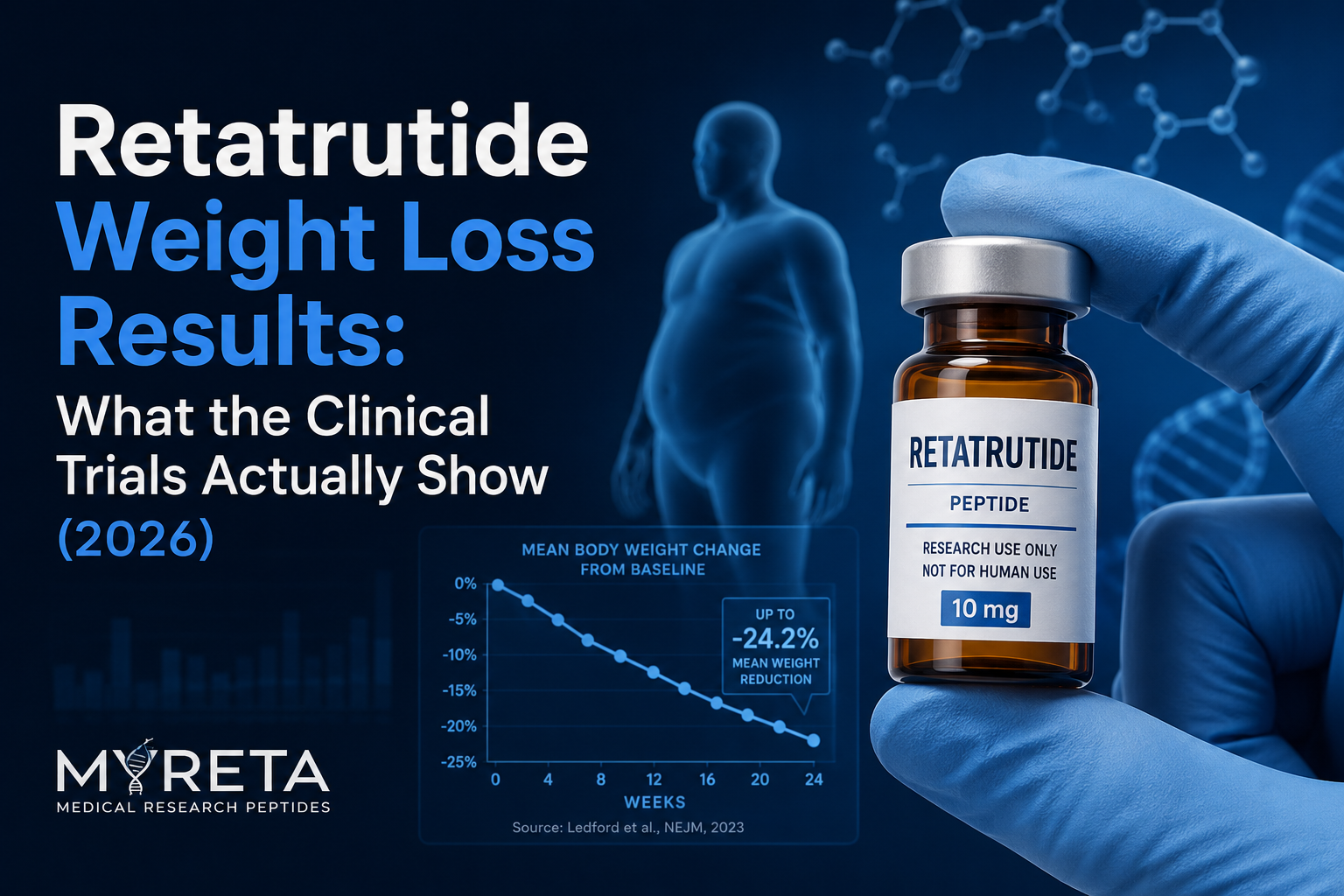
The clinical progression of Reta has advanced significantly, with Phase 3 trials demonstrating weight loss of up to 28.7% and significant pain reduction in osteoarthritis patients. With an FDA filing expected later in 2026, the medical community is closely monitoring this breakthrough.
Read the Full TRIUMPH Phase 3 Results
Frequently Asked Questions
What is retatrutide?
Retatrutide is an investigational “triple agonist” medication that targets three hormone receptors: GIP, GLP-1, and the glucagon receptor. It is currently being studied for its potential to treat obesity, type 2 diabetes, and MASH. It is not yet approved by any regulatory body and remains restricted to legitimate research settings.
What does LY3437943 mean?
LY3437943 is retatrutide’s development-pipeline code from Eli Lilly — the internal identifier used before a compound is given its official non-proprietary name. It refers to the exact same molecule as “retatrutide”, cataloged under CAS Registry Number 2381089-83-2.
How is the medication administered?
Retatrutide is administered as a weekly subcutaneous injection. Clinical trials have utilised a gradual titration schedule to reach a maintenance dose, typically between 4 mg and 12 mg. If you’re working through reconstitution volumes for research purposes, our retatrutide calculator converts vial concentration and pen KLIKs into mL and units automatically.
How is retatrutide different from tirzepatide or semaglutide?
Semaglutide activates one receptor (GLP-1), tirzepatide activates two (GLP-1 and GIP), and retatrutide activates all three (GLP-1, GIP, and glucagon). The added glucagon activity is what drives retatrutide’s trial results on liver fat and energy expenditure specifically. See our full Retatrutide vs Tirzepatide comparison for the complete data breakdown.
What is the molecular weight and formula of retatrutide?
Retatrutide has a molecular weight of 4731.33 Daltons and a molecular formula of C221H342N46O68. It is a synthetic 39-amino-acid peptide built on a modified GIP backbone with a C20 fatty diacid lipidation at position 17.
Is retatrutide approved for use?
No. Retatrutide is not yet approved by the MHRA, FDA, or any other regulatory body. It remains an investigational compound restricted to legitimate, authorised research protocols — not for human consumption.
Every compound MyReta supplies ships with an independent, batch-specific Certificate of Analysis — see our quality testing page for how purity is verified.